Sex Therapy is a Liberatory practice: On Audre Lorde, Sex Therapy, And Our Right To Feel Pleasure
Sex therapy is a space where people can find healing and a right relationship to themselves and each other, in a country shaped by settler colonialism and Judeo-Christian values. It asks us to explore the most vulnerable parts of ourselves right at the front of the therapeutic relationship, and I think that has never been more necessary.
As the United States settles into a post-pandemic and an evermore derisive, dystopian political era, systems of oppression have taken a front seat in our conversations, at home and around the water cooler (or, these days, in Microsoft Teams or Slack, I suppose).
People often come to sex therapy because of attachment wounds and sexual trauma. We usually treat these wounds as individual problems. I’d argue they’re communal traumas, caused by systems that teach us that tending to our most vulnerable parts is taboo and unsightly. That repression is a tool of settler-colonial institutions and white supremacy, and it keeps us divided and powerless.
Audre Lorde and the erotic
Audre Lorde (1934-1992) was a Black lesbian poet, essayist, and activist, born in Harlem to Caribbean immigrant parents. She spent her career writing about race, gender, class, and sexuality, and her work is foundational to feminist and queer thought. She first delivered “Uses of the Erotic: The Erotic as Power” in 1978 as a talk at a women’s history conference at Mount Holyoke College. It was later collected in her book Sister Outsider.
In it, Lorde writes about the power of deep connection with ourselves and each other, and she calls it “the erotic.” She didn’t mean only sexual connection, though that’s certainly not excluded. She meant a deep somatic and spiritual connection, a mode of perception underneath our ability to create with revolutionary force.
In The Uses of the Erotic, Lorde explains that the erotic has been corrupted so that oppression can continue. She writes that the deep feeling and spiritual power of women is suppressed and exploited by men, who fear it. If we harnessed that power fully, we would stop making ourselves smaller for their sake, and we would be moved to create, engage, and dismantle.
Lorde writes this essay specifically about women’s sexuality, and the intersections of socialized gender and assigned sex at birth can’t be separated from her work. I don’t want to flatten that. But I’d argue that all of us contain feminine and masculine energies, and that all of us have access to the erotic.
As a trans masculine person, I really believe this. I also think rooting down into feminine eroticism, friendship, and power might be the necessary antidote to oppressive masculinity. If the erotic is the deep feeling that oppression teaches us to fear, then reclaiming it isn’t only women’s work.
Why repression keeps us stuck
It follows from Lorde that we find ourselves erotically and sexually repressed. We can trace it to the patriarchal, Judeo-Christian ideals brought here by Puritan colonizers, which shape how we understand ourselves as sexual, deeply connected human beings.
White supremacist culture works to protect itself (Okun, 2021), and repressing the erotic keeps us separate from one another. The individualism of American culture feeds the disconnection that lets the ruling class hold onto their wealth and power. The more we abolish systems that don’t serve us and buildones meant to sustain and heal us, the more those with the most to “lose” push back.
Lorde puts it this way: “The fear that we cannot grow beyond whatever distortion we may find within ourselves keeps us docile and loyal and obedient, externally defined, and leads us to accept many facets of our own oppression... In touch with the erotic, I become less willing to accept powerlessness.”
In order to distance ourselves from oppressive systems, we have to get in touch with the deep parts of ourselves that those systems tell us to repress for the sake of decency. I’m asking you to question “decency.” I’m asking you to question the relationship games we play, where our fear of connection outweighs our need for it.
The therapeutic relationship is a safer place to explore and make meaning of these parts of ourselves. Sex therapy simply puts at the front what traditional therapy often saves for last.
How the personal is political
Helping people find a right relationship with their mind, body, and spirit fuels social movements. Ignoring the erotic means ignoring a part of human experience that connects us to one another, and that only upholds the structures that keep us apart.
When we let them divide us, we stay powerless. But when we refuse the story that sex and intimacy are secret, something to be “saved for marriage” (a relationship witnessed and governed by the colonial state), we reconnect. Those connections build community and understanding, and closeness, as Lorde says, lessens the threat of our differences.
It’s necessary to name the terrifying parts of this moment: police brutality, a housing crisis, widespread chemical dependency, authoritarian immigration policy, violence against women, anti-Trans and anti-Queer rhetoric and action, anti-critical-thinking education policy, extreme economic stratification, unchecked greed infecting AI technologies, the slow march toward planetary uninhabitability. And yet - we are still alive, which is more than we can say for some of our friends. We are still falling in love. We are still laughing with our friends.
Finding connection while the world burns meets our need for safety and healing in a small way, and that builds the base of much needed movements. Joy gets colonized and disrupted by systems of oppression, and we have this moment to take it back, in right relationship with each other. Romance, love, and sex are some of the most powerful ways to do that.
This is a call to everyone, and especially to those of us in social justice movements: question what you’ve been taught about your body, your worthiness, and your right to feel pleasure. Especially now.
HOW MODERN THERAPY SEATTLE CAN HELP
If you’re ready to question, or you’ve already been questioning, what you’ve been taught about your body, your worthiness, and your right to feel pleasure, you don’t have to navigate that journey alone.
Clinicians at Modern Therapy Seattle view sex therapy as a fundamentally liberatory practice. We know that sexual trauma, body shame, and intimacy struggles aren’t just individual issues. These things are heavily influenced by cultural, religious, and political systems that train us to repress our desires and shrink our capacity for connection.
Whether you are looking to process sexual or attachment trauma or reclaim the erotic as a source of personal power and community connection, our team provides a deeply affirming, judgment-free space to do this sacred work. We center consent, body sovereignty, and the full spectrum of gender, relational, and sexual diversity.
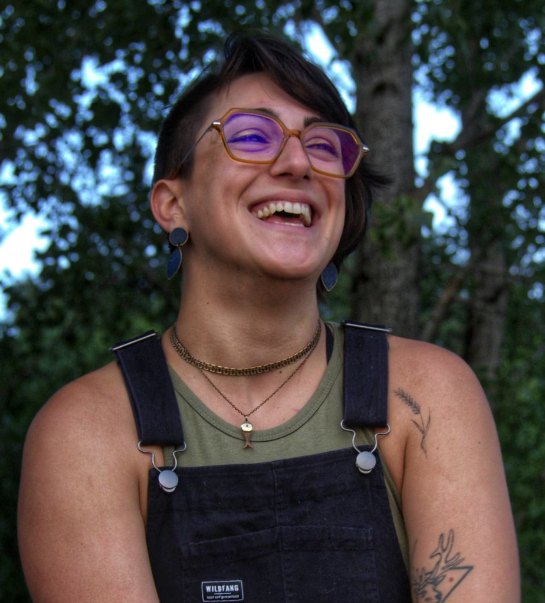
If this perspective resonates with you, our amazing clinician Brantly works closely with individuals, couples, and relationships of all kinds through this exact lens of community care, somatic awareness, and liberatory healing.
Modern Therapy Seattle offers in-person therapy in Seattle and telehealth therapy throughout Washington state.
If you’re ready to move away from shame, honor your full self, and build a relationship with your body and intimacy that feels grounding and empowering, reach out to connect with Brantly or another therapist on our team today.